High-Capacity Kitchen Scale
4.7/5.0 Rating | $18K Monthly Net Revenue
Following the strong market performance of entry-level digital kitchen scales, an opportunity was identified to extend a proven product concept into a higher-capacity, premium segment. The project focused on enhancing functional specifications and material quality to address users with heavier weighing needs while maintaining clear differentiation from mass-market offerings. To develop a 22lb high-capacity digital scale with a target MSRP of $20–30, positioned to compete in the premium segment of the kitchen scale market.
Client
Greater Goods
Role
Product Developer
Services
Product Development Critical Path Management Manufacturing Liaison Quality Control (QA)
Industries
Home appliance
Date
July 2022

The core actions and challenges: 1. Evaluated capacity, material, and structural requirements to support higher load performance without compromising accuracy or long-term reliability 2. Assessed trade-offs between metal construction, component cost, and manufacturing feasibility to align with target pricing and brand image 3. Coordinated with suppliers to validate tooling, materials, packaging and production readiness for scaled manufacturing


Entry-level digital scales dominated the sub-$20 segment, creating an opportunity to introduce a higher-capacity, premium alternative with improved materials and load performance.

Core differentiation: Increased load capacity to 22lbs combined with a metal platform, and other benefits to improve durability, stability, and perceived product value.

The product was optimised holistically across UI/UX, internal structure, material selection, and cost considerations to ensure performance, manufacturability, and market alignment.

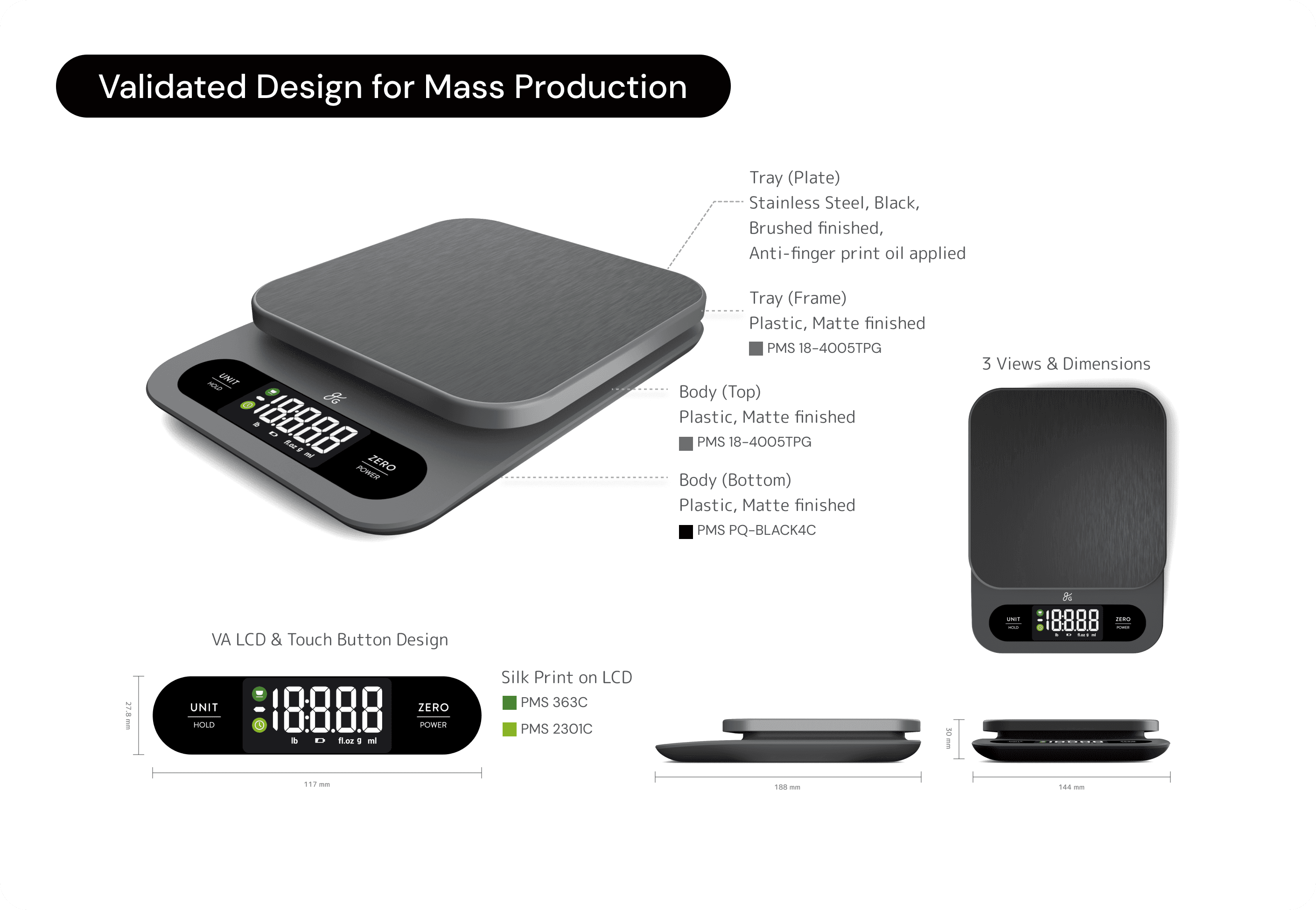
Material & Build Decision 1. Stainless Steel + ABS Tray vs. Chrome Plastic Alternative An ABS tray with a stainless steel surface and anti-fingerprint treatment was selected to balance metal appearance, durability, cost, and production feasibility. Compared to chrome plastic, this solution avoided long-term peeling and hygiene issues, while remaining more cost-efficient than a fully stainless steel construction.

2. Dark Colour Selection for Visual Durability A darker colour palette was chosen to better conceal fingerprints, scratches, and everyday wear, creating a more professional and reliable visual impression. This aligns with the expectations of a function-driven kitchen product and improves perceived longevity during regular use.

3. Cost Optimisation Without User Impact The anti-slip feet were selectively reduced after stability testing, ensuring grip performance, safety, and user experience remained unchanged. This adjustment saved unit costs while maintaining product stability and usability.